For most of its history, medicine has been reactive: symptoms appear, a diagnosis follows, and treatment begins. A new generation of artificial intelligence is starting to change that order. By learning from millions of health records, overnight sleep recordings and screening images, AI systems can now estimate who is likely to develop a disease, sometimes years before the first symptom appears. Several landmark studies published over the past year show how far this shift towards predictive medicine has come, and what still needs to happen before it becomes part of everyday care.
A Language Model for Human Health
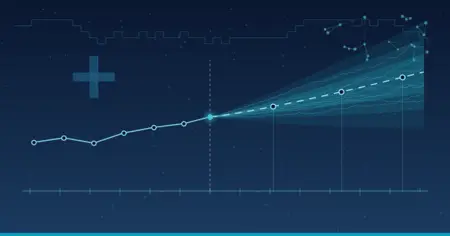
Large language models learn to predict the next word in a sentence. A team of European researchers from EMBL, the German Cancer Research Center (DKFZ) and the University of Copenhagen applied the same idea to medical histories. Their model, Delphi-2M, published in Nature in September 2025, reads a person’s past diagnoses, together with factors such as age, sex, body mass index, smoking and alcohol use, as a sequence of health events and learns to predict what is likely to come next. Trained on data from around 400,000 UK Biobank participants and then tested, without any changes, on the health records of 1.9 million people in Denmark, Delphi-2M estimates the risk of more than 1,000 diseases and can simulate possible health trajectories up to 20 years into the future.
For individual conditions such as cardiovascular disease and dementia, the model performs on par with established single-disease risk scores. Its real strength is breadth: a single model covering the whole spectrum of disease, including the way conditions cluster and follow one another. Because it is generative, it can also produce realistic synthetic patient data, which could help train other AI models without exposing real individuals.
One Night of Sleep, 130 Diseases
Other researchers are finding predictive signals in unexpected places. In January 2026, a team from Stanford University and the Technical University of Denmark (DTU) presented SleepFM in Nature Medicine. This foundation model was trained on more than 585,000 hours of polysomnography (overnight recordings of brain, heart, muscle and breathing activity) from around 65,000 people. From a single night in a sleep laboratory, it can estimate the future risk of around 130 conditions, reaching accuracy of up to 85% for diseases such as dementia, heart attack, atrial fibrillation and chronic kidney disease. Sleep studies are already routinely performed to diagnose sleep disorders; SleepFM suggests they hold far more information about a patient’s overall health than is currently used.
Catching a Silent Killer Earlier
Pancreatic cancer is among the deadliest cancers, largely because it is usually discovered at a late stage. In September 2026, researchers from Mayo Clinic presented an AI model at the American College of Surgeons Clinical Congress that analyses years of electronic health records and routine laboratory results to identify people at elevated risk up to three years before diagnosis. Developed using the records of more than 6,000 patients with pancreatic cancer and over 33,000 controls, the model reached an AUROC of 0.85 at the three-year horizon (where 1.0 means perfect discrimination and 0.5 is no better than chance). The team is now moving to prospective validation, including at a health system outside Mayo Clinic – a crucial step before any clinical use.
From Prediction to Proven Benefit
Predicting disease only helps patients if it leads to earlier and better care. This is why the final results of the Swedish MASAI trial, published in The Lancet in early 2026, attracted so much attention. In one of the first large randomised controlled trials of AI in breast cancer screening, around 106,000 women were assigned either to AI-supported mammography screening or to standard double reading by two radiologists. AI support led to 12% fewer interval cancers – cancers diagnosed between screening rounds, which tend to be more aggressive – including 27% fewer cancers of aggressive subtypes. Sensitivity improved without an increase in false positives, and earlier analyses of the same trial showed a 44% reduction in radiologists’ screen-reading workload. It is one of the clearest demonstrations so far that AI-driven early detection can deliver measurable benefits at population scale.
The Questions That Remain
Promising as these results are, the researchers behind them are the first to urge caution. Most predictive models are still evaluated retrospectively and trained on cohorts that do not fully represent the wider population; UK Biobank participants, for example, tend to be healthier and less ethnically diverse than the general public. A risk estimate is not a diagnosis, and predictions that are poorly calibrated or poorly communicated can cause anxiety, overdiagnosis and unnecessary testing. There are also important questions about consent, data protection and who should have access to predictions about a person’s future health. Ultimately, the value of a predictive model can only be established through prospective studies and trials, like MASAI, that show better outcomes for patients.
What This Means for Healthcare Professionals
As medicine moves from reacting to disease towards anticipating it, the role of clinicians is changing too. Doctors, nurses and other healthcare professionals will increasingly need to interpret probabilistic risk estimates, understand the data and limitations behind them, recognise when a model may not apply to the patient in front of them, and discuss uncertain predictions with patients clearly and empathetically. These are exactly the competences AI2MED aims to strengthen. By bringing AI knowledge into medical education and professional training, the project helps ensure that Europe’s healthcare workforce is ready not only to use predictive AI, but also to question it, evaluate it and apply it responsibly – so that seeing disease coming ultimately means preventing it.