Artificial intelligence can improve healthcare diagnostics, research in molecular medicine, educational processes, as well as conditions for the development of innovative businesses in Montenegro, it was stated yesterday at the second national conference “AI Directly: Montenegro in the Time of AI Challenges.”
At the panel “Application of AI in Education, Healthcare, and Other Sectors,” participants and experts from various fields spoke about the impact and potential of artificial intelligence in Montenegro. They emphasized the importance of ethical use of technology, strengthening digital skills, and creating institutional prerequisites for the broader application of AI across different sectors.
Ždralević Artificial Intelligence Is Becoming an Indispensable Tool in Molecular Oncology
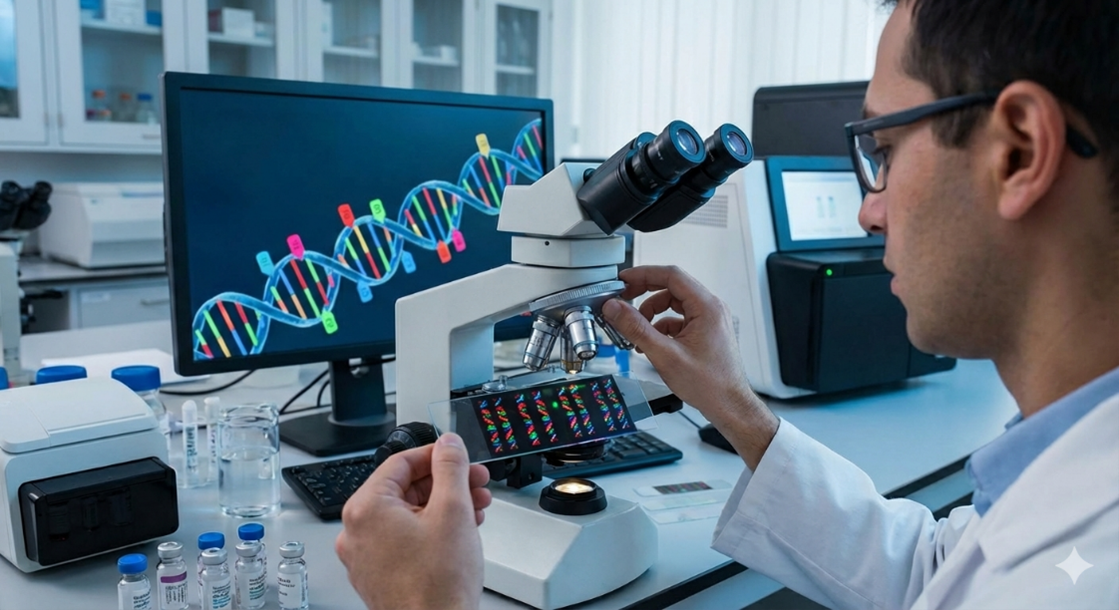
Dr. Maša Ždralević, Research Associate at the Institute for Advanced Studies and Head of the Laboratory for Molecular Medicine at the Faculty of Medicine of the University of Montenegro, emphasized that modern molecular oncology is entering a phase of strong integration with artificial intelligence, particularly in the areas of early detection and personalization of cancer therapy.
As a molecular biologist, Dr. Ždralević studies the mechanisms underlying tumor development and aggressiveness, including metabolic reprogramming of cancer cells. As she explains, changes in tumor metabolism can indicate its ability to metastasize, while analyses such as liquid biopsy and microRNA profiling are becoming increasingly important complementary tools to existing early detection methods.
“Today it is already clear that artificial intelligence is not merely a subject of speculation — developed models and algorithms help process the data we generate in the laboratory. The integration of broad omics datasets, such as transcriptomics, proteomics, metabolomics, and lipidomics, with clinical and demographic information enables the discovery of patterns that the human eye cannot detect,” she said.
A particular challenge, Ždralević notes, is the analysis of the metabolome — a snapshot of all metabolites in the organism — which can indicate the presence of pathology. “When ten different omics layers are combined with clinical data, that is an amount of information a single researcher cannot process. This is where AI models play a decisive role.”
She emphasized that scientific papers already exist showing high accuracy of algorithms in predicting risk, therapy response, or resistance development in the most common cancer types, such as breast, lung, and colorectal cancer. The integration of digitized pathological images with data from spatial transcriptomics enables the development of precise prognostic models that can assist physicians in making therapeutic decisions.
Dr. Ždralević revealed that researchers from Montenegro have recently submitted a project in the field of AI application in molecular oncology, in cooperation with the Clinical Center of Montenegro, based on domestic data. “We hope to have the opportunity to implement this project, as we believe this is the direction we must move in.”
She also highlighted the development of new biomarkers from liquid biopsy as one of AI’s key potentials, enabling disease detection before clinical symptoms appear. “That is the moment when the most can be done for the patient,” she said.
However, she warned of the need for caution: models require valid biological hypotheses, high-quality patient cohorts, and rigorous validation across different populations. “We must not view AI as a magic key. It takes time for these models to be permanently integrated into clinical practice — but they already play an indispensable role.”
Radović: Artficial Intelligence Is Key to Relieving Doctors and Reducing Waiting Lists
The Director of the Clinical Center of Montenegro (KCCG), Dr. Aleksandar Radović, stated that artificial intelligence is becoming an essential tool in the modern healthcare system, particularly due to the dramatic increase in patient numbers and the complexity of modern diagnostics.
“We belong to a generation of doctors who began their careers in the analog era. When digitalization arrived, we were enthusiastic, but it simultaneously created new challenges — the number of patients is growing faster than our profession can respond,” Radović said.
The number of patient contacts at KCCG has increased from around 700–800 thousand to as many as 1.8 million annually, while diagnostic needs continue to grow with each new device and method. At the same time, the number of medical staff does not follow this trend.
AI Already Shortens Diagnostic Time
Radović emphasized that AI is already being used in radiology, where it significantly accelerates doctors’ work.
“While it takes a doctor 15 to 40 minutes to analyze a CT or MRI scan, with the help of AI the information can be obtained in just five minutes,” he explained. “This is a tremendous help, but it also raises ethical questions — should AI be allowed to make final decisions on whether a patient is ill?”
In pathology, with the support of the Innovation Fund, KCCG has launched a project for digital analysis of histopathological samples. Upon completion, AI is expected to mark cells that deviate from normal, while the pathologist makes the final diagnosis.
Administrative Burden – The Biggest Problem
According to Radović, doctors today spend more time in front of monitors than interacting with patients.
“Information systems have helped us, but they have also burdened us. Today, a doctor spends half of the examination looking at a screen. This disrupts the patient–doctor relationship,” said the KCCG director.
He emphasized that these problems are even more pronounced in Europe — patients often arrive with pre-determined ‘diagnoses’ found on the internet, further complicating the treatment process.
Artificial Intelligence as a Solution to Waiting Lists
Radović believes that the greatest potential of AI lies in healthcare system organization, particularly in automating scheduling and reducing missed appointments.
After introducing SMS reminders, KCCG reduced the number of missed appointments by around 100,000 compared to the previous year.
“That was a simple system. Now imagine what we can achieve when AI manages available appointments in real time, calls patients, and optimizes the entire referral network between primary, secondary, and tertiary care,” Radović emphasized.
He warned that currently as many as 70% of patients are treated at the tertiary level, which drastically burdens KCCG and the financial system, even though most could be treated at the primary level.
Prevention and Organization – Areas AI Can Transform
Radović stressed that AI can help improve education, strengthen preventive medicine, and prevent unnecessary strain on the system, but with strict limitations when it comes to making medical decisions.
“Artificial intelligence can do a lot, but its role must be clearly defined. In administration and organization — unlimited. In diagnostics — as a tool. In decision-making — strictly controlled.”
The director stated that if current projects prove successful, KCCG will launch broader initiatives and leverage AI’s potential to make the healthcare system more efficient and accessible to citizens.
Pavićević: Without Data and Mathematics, There Is No Serious Artificial Intelligence in Montenegro
Milutin Pavićević, founder of the startup Zuno and assistant at the University of Donja Gorica (UDG), stated that Montenegro has an exceptional opportunity in the field of artificial intelligence thanks to high-quality university staff, but that a low data culture and insufficiently strong mathematical education seriously limit progress.
Speaking about the development of AI education, Pavićević reminded that this process in Montenegro has largely relied on the enthusiasm of individuals.
“Our educational system, when it comes to artificial intelligence — and earlier with programming and informatics — was based on the enthusiasm of individuals who initiated certain developments at universities, which were then systematized into knowledge and practice over the years,” he said, recalling the role of Professor Krstajić and the founding of the Computer Engineering program in 2001 with Professor Goran Šuković.
As a major advantage, he highlighted the fact that today “at almost all universities and faculties dealing with artificial intelligence” there are people driving the development of this field — from Aleksandar Plamenac, Igor Jovančević, and Savo Tolmović at the Faculty of Science, to Vesna Popović Bugarin at the Faculty of Electrical Engineering, and Stevan Čakić at UDG.
AI Must Not Become a “Religion”
Pavićević warned that artificial intelligence cannot be knowledge that is “learned once at university,” but rather a field requiring continuous learning and deeper understanding.
“A growing gap is emerging between people who truly know how to read and write code, understand models, and work on explainability and predictability of AI systems — and those who view AI as magic and rely exclusively on large language models,” he emphasized.
In this context, he particularly stressed the role of advanced educational programs such as postgraduate studies, international machine learning schools, and institutions like the National Competence Center and similar initiatives, which should enable young people to improve their skills both domestically and abroad.
“These people are needed so that artificial intelligence does not become a religion in the sense of ‘I believe ChatGPT.’ We must know what we are doing, not just use tools,” Pavićević said.
AI as the New Informatics – Part of Everyone’s Job
Pavićević believes that artificial intelligence will become “the next informatics” — something every professional must at least basically understand.
He recalled the resistance that existed when it was expected that “IT staff should manage electronic gradebooks,” whereas today basic digital literacy is taken for granted.
“I hope we will be smarter this time — that already at universities and in the first years of employment we explain to people that working with artificial intelligence, at least in terms of prompt engineering and understanding what we can expect from it, is an integral part of everyone’s job,” he said.
Where AI Most Increases Productivity
Speaking about global experiences, Pavićević stated that the biggest productivity gains come from applying large language models in business processes involving large volumes of documents and repetitive tasks.
As an example, he cited IBM’s “Power to the People” initiative, where the largest effects of AI transformation were achieved first in:
- procurement (processing tenders, RFPs, and applications),
- legal departments,
- IT sectors,
- human resources (HR).
“Wherever there is high automation and huge amounts of data that need to be transformed from one format to another, sorted, and key elements extracted — large language models are currently the biggest productivity booster,” Pavićević said.
He cited examples of companies such as BMW and insurance firms, where productivity increases of up to 30% per employee were recorded after implementing such solutions in document processing workflows.
The banking sector, insurance, customer support, call centers, and all systems that process large amounts of text, in his view, will be among the most affected — but in a positive sense — by productivity growth.
“The Biggest Weakness – Attitude Toward Data”
As the key obstacle to AI development in Montenegro, Pavićević identified an “extremely low culture of data management.”
“We do not store, systematize, or share datasets. Our students learn using synthetic and foreign datasets. Our seminar papers, instead of generating ideas to improve processes in Montenegrin companies, end up repeating the same procedures on foreign data,” he warned.
He welcomed the launch of open data initiatives in public administration but believes much more is needed: faster and simpler access to relevant, well-systematized, and at least periodically updated datasets for science and education.
“Open data portals can be an equally good source for seminar papers, bachelor’s theses, master’s theses, and doctoral dissertations. If we need to change one thing about ourselves, it is our culture of data management,” Pavićević said, adding that such changes would enable universities to ‘produce’ a large number of ideas that could be turned into startups and solutions within existing companies.
Mathematics as the Foundation
In closing, Pavićević emphasized that one thing must not be forgotten in discussions about artificial intelligence — mathematics.
“If we want to truly understand artificial intelligence, we must have strong mathematical education,” he concluded.
The panel was moderated by Ivan Bošković, Executive Director of IT Advanced Services