As someone who loves running, hiking, and tracking every heartbeat with a smartwatch, I have always wished my health apps could “talk to each other.” Now, with OpenAI’s ChatGPT Health, that dream might finally be real.
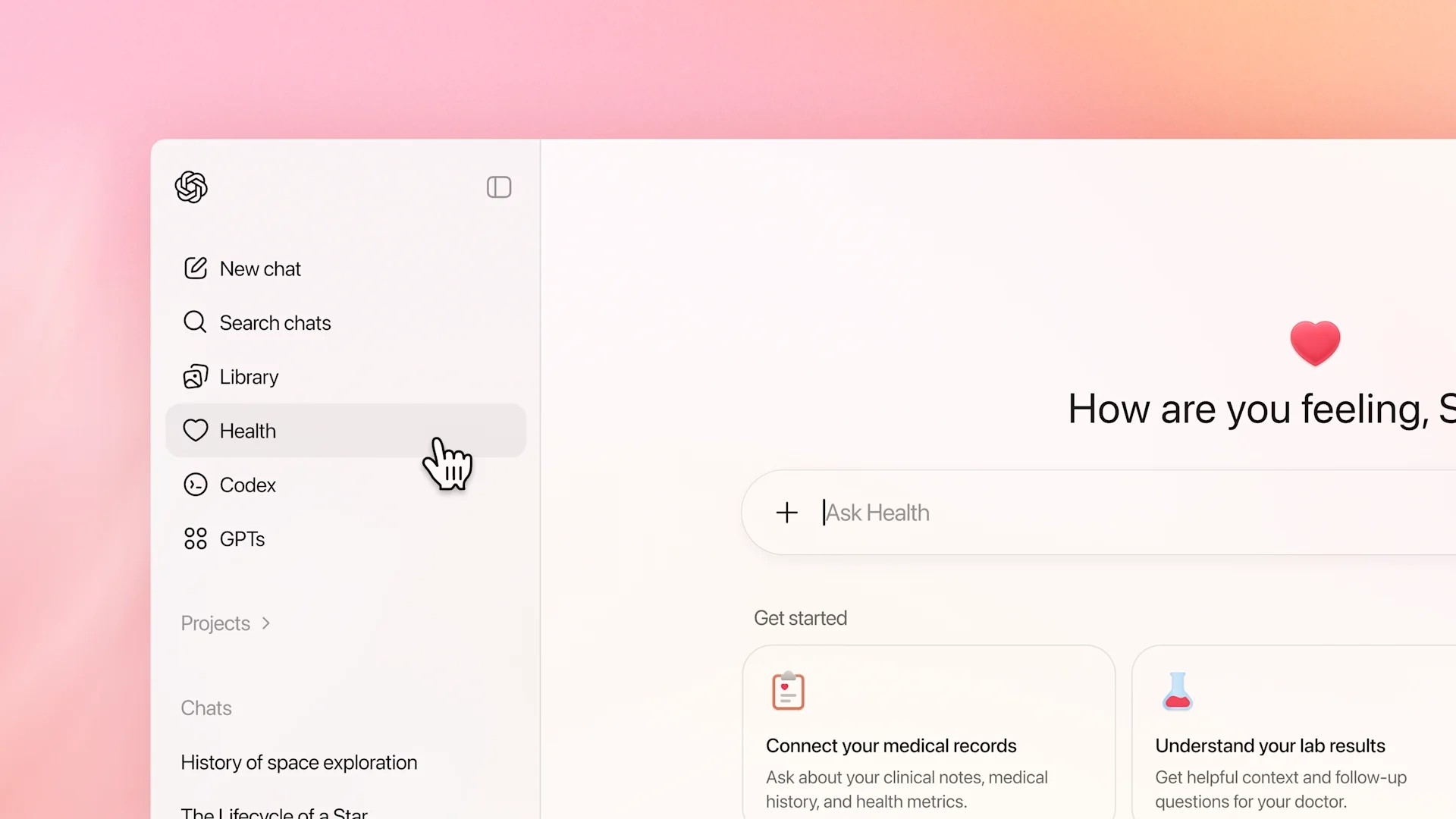
Launched this month, ChatGPT Health transforms the popular AI assistant into a personal health companion. It creates a secure space inside ChatGPT where you can connect your health and fitness data, medical records, and wellness apps, then chat naturally about your well-being. Think of it as having a knowledgeable, always-available guide who helps you understand your own data and prepare for your next doctor’s visit.
You can simply ask:
How is my cholesterol trending?
Summarize my latest bloodwork before my appointment.
Create a realistic weekly workout plan based on my data.
ChatGPT will then pull insights from your connected information to give tailored, practical answers.
How It Works
The experience feels just like chatting with ChatGPT, but the answers are grounded in the data you choose to connect. You can upload files, photos, or lab results, or connect apps like Apple Health, MyFitnessPal, Function, Weight Watchers, AllTrails, Instacart, and Peloton.
That means your smartwatch data, sleep, steps, heart rate, even your favorite hiking routes, can feed into your personal health chat. The assistant can then help you interpret the information, recommend recipes or workouts, or even turn meal plans into shopping lists.
You are always in control, every app connection requires explicit permission, and you can disconnect anything instantly in Settings.
Importantly, ChatGPT Health was developed in close collaboration with physicians around the world. Its goal is not to diagnose or treat but to provide clear, useful, and contextual health information that supports your medical care.
You can even add custom instructions, for example, to tell ChatGPT to focus on sports recovery, nutrition goals, or a specific medical condition, so your conversations feel truly personal.
Security and Privacy
OpenAI emphasizes that privacy and data security are at the core of ChatGPT Health. The health workspace is completely separate from your regular ChatGPT chats. Conversations and data shared here are not used to train AI models, ensuring your information stays private.
For users in the United States, OpenAI has partnered with b.well, the largest secure network of live, connected health data for U.S. consumers. b.well follows strict HIPAA standards and allows users to remove access at any time.
All third-party health apps that connect through ChatGPT Health must meet OpenAI’s privacy and security requirements, collecting only the minimum data necessary and undergoing extra security review before inclusion. Every time you connect a new app, you’ll see exactly what data it can access, and you can revoke that access with one tap.
Where It is Available
For now, ChatGPT Health is available only in the United States, with broader access planned in the coming weeks.
OpenAI says a European rollout is on the roadmap, and users in the EU can sign up for the waitlist at chat.openai.com/health/waitlist. Once available, you will simply open ChatGPT, select Health from the sidebar, and start bringing your data together.
When ChatGPT Health reaches Europe, it will support the same features, uploading medical files, syncing health trackers, and connecting to compatible apps, within EU privacy frameworks.
Conclusion
With more than 230 million health-related questions already asked on ChatGPT each week, this step feels like a natural evolution. By combining AI intelligence, real health data, and medical expertise, ChatGPT Health could make healthcare information more understandable and accessible than ever before.
For fitness lovers, new parents, or anyone managing a chronic condition, it might soon become as essential as your smartwatch. And while it will never replace a doctor, it just might become your most trusted health companion between visits