Over the past few months, there has been a significant increase in media coverage regarding various developments in medicine and the application of artificial intelligence. We have followed events showcasing completely new technologies, as well as those we have previously covered, such as the local SENDD system, which recognizes developmental issues in babies from a simple video recorded on a smartphone. However, today the main focus is on something that should solve the biggest current problem in medicine: excessive administration and long waiting lists.
Leading national televisions have recently reported that artificial intelligence will soon enter our clinics in a big way.
The end of typing and solving administration
Recently, RTL Direkt broadcast a segment focusing exactly on the imminent arrival of technologies that will directly assist our doctors in their daily practice by taking on the role of an “invisible scribe”. New smart systems have the ability to listen to the conversation between the doctor and the patient and automatically generate a complete medical report in real time. This removes a huge bureaucratic burden, speeds up patient flow, and finally gives doctors the opportunity to look the patient in the eye again, rather than at a computer monitor.
High precision in laser treatments
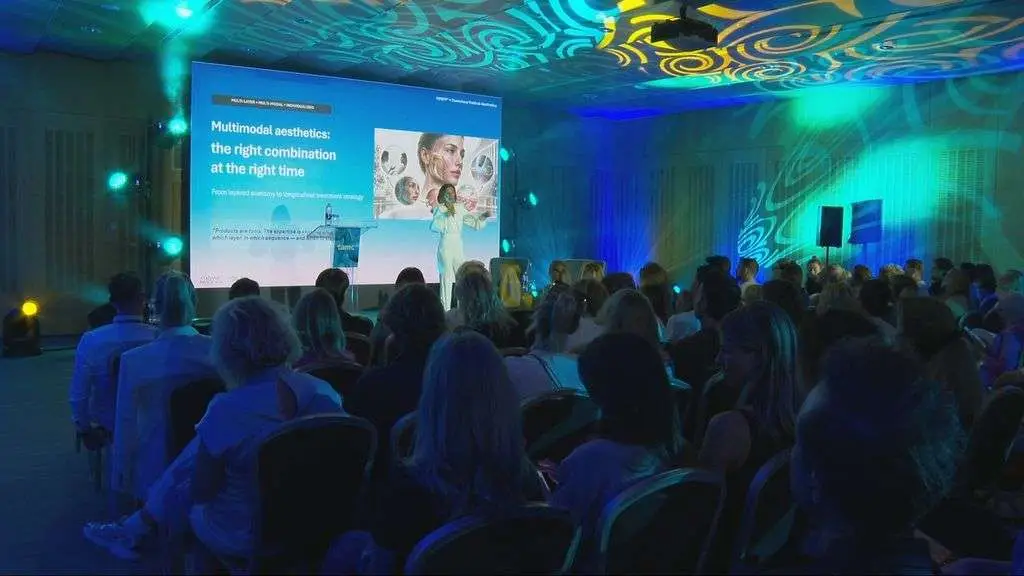
After that, there were further reports showcasing AI’s impact across other medical fields. Dnevnik Nove TV brought a report from the international congress of aesthetic medicine in Dubrovnik. Experts explained on camera how AI is changing dermatology and aesthetic medicine by taking on the role of a co-pilot with incredible precision. Today, AI scans the skin in detail and in a split second independently calibrates the laser power for every millimeter of a scar or injury. The algorithm literally prevents the device from damaging healthy tissue, which compensates for any fatigue or drop in concentration of the operator, which is crucial when treating very serious injuries.
Robotic technology and surgical advancements in Osijek
The real-world integration of these medical technologies was further highlighted at the 17th Congress of the Croatian Society for Endoscopic Surgery, held in Osijek from October 8 to 10, 2026. A major focus of the professional gathering was the connection between medicine, robotic surgery, and artificial intelligence.
Medical experts at the congress presented the first Croatian experiences with robotic-assisted surgery. Thanks to the development of these technologies, complex operations are now performed using minimally invasive techniques, allowing patients to experience less pain, shorter hospital stays, and a faster return to daily activities. During the event, it was officially announced that the Clinical Hospital Centre (KBC) Osijek will soon acquire its own robotic surgical system. As highlighted by KBC Osijek officials, this equipment is part of a broader investment and preparation for the new hospital building, ensuring the region is equipped with modern medical technologies for the next decades.
Conclusion
Artificial intelligence and advanced robotics are gradually becoming a standard part of medical infrastructure in Croatia. Rather than futuristic concepts, these technologies are currently being implemented as practical tools to assist medical professionals with specific tasks. Administrative AI solutions aim to reduce the hours doctors spend on medical documentation, while AI-guided lasers and robotic surgical systems provide higher precision and safety during physical procedures. Together, these incremental changes represent a steady, factual shift toward a modernized healthcare system that prioritizes operational efficiency and optimized patient care.