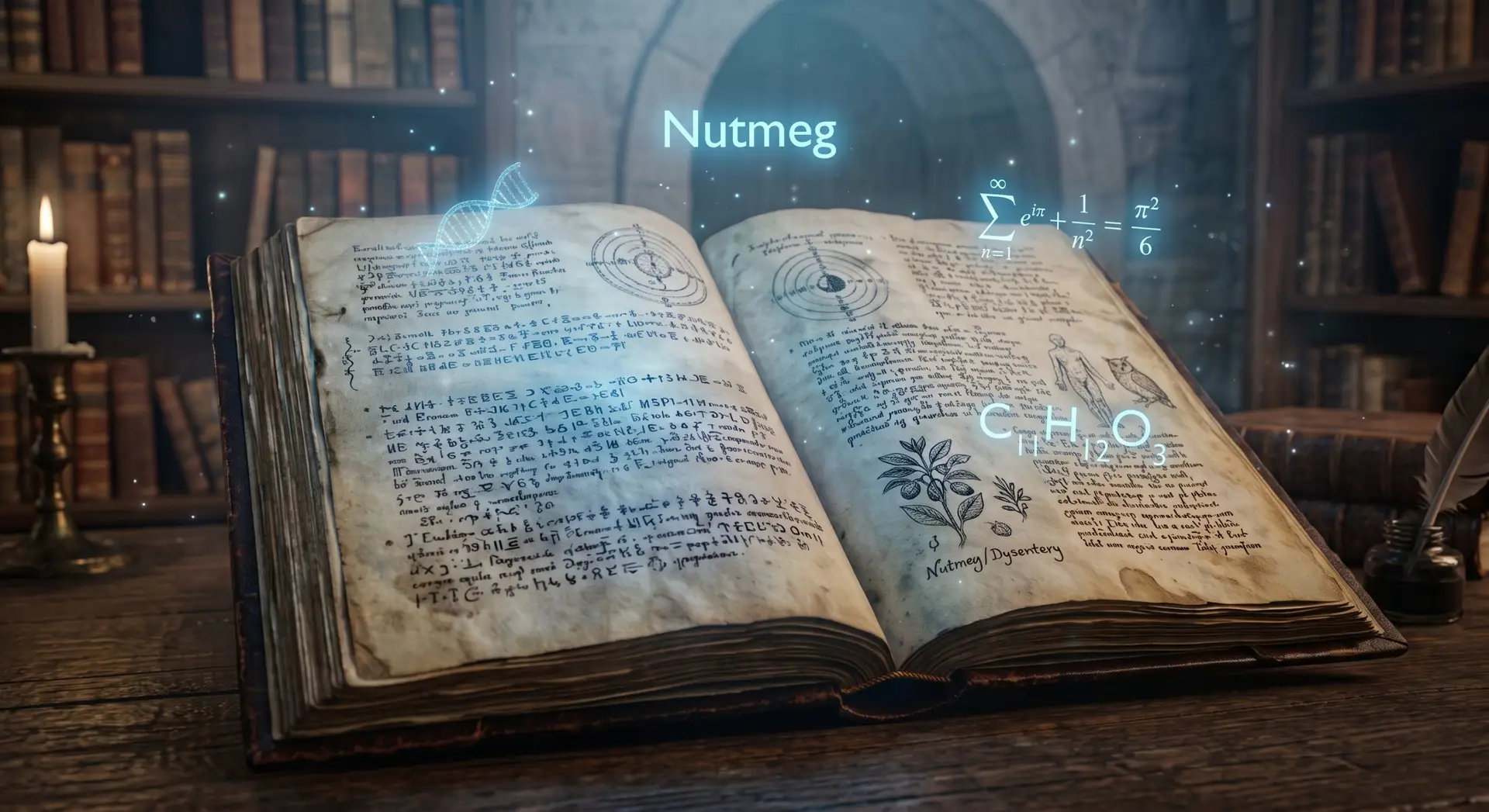
For more than 400 years, a mysterious 408-page manuscript kept its secrets hidden. Now, researchers are using artificial intelligence and computational linguistics to understand a coded text preserved in the Vatican Apostolic Library.
Known as the Borg Cipher, the manuscript is filled with unusual symbols and writing that made it extremely difficult to read. What makes it especially interesting is what appears to be hidden inside: recipes and medical treatments for illnesses affecting the human body.
The manuscript offers a rare look at medicine in a time when the line between healing, traditional medicine and witchcraft could be very thin.
A secret book of medicine
The manuscript contains hundreds of pages of coded material and references to different remedies, ingredients and ways of preparing medicines.
Some of the treatments sound strange to us today.
One of the most interesting examples is wine used as medicine. Several recipes reportedly recommend drinking several glasses of good-quality red wine as part of a treatment. In the 17th century, wine was commonly viewed not only as a drink but also as something that could have medicinal uses.
Another unusual recipe involves nutmeg and dysentery. One account of the manuscript describes fermenting nutmeg in dough and then using the preparation to treat dysentery. The disease could be extremely dangerous at the time, especially because severe dehydration could lead to death.
The manuscript is also described as containing hundreds of recipes for what was referred to as the “affections of the human body.” These include treatments connected with fevers, digestive problems and other illnesses.
For people living hundreds of years ago, this kind of information could have been extremely valuable. It could also have been dangerous to possess.
Why was the knowledge hidden?
In early modern Europe, people who worked with medicinal plants and unusual treatments could sometimes be accused of magic or witchcraft.
Writing medical knowledge in a secret code may therefore have been a way to protect it. The information could be preserved and passed on without being easily understood by outsiders.
That makes the manuscript more than just an old collection of strange recipes. It is also a record of how people understood illness and treatment centuries ago.
What did AI actually do?
AI did not simply read the manuscript and translate it like a modern document.
Researchers used machine learning, statistical analysis and computational linguistics to look for patterns in the symbols and writing. These methods can process large amounts of text and compare repeated symbols much faster than a person working through hundreds of pages by hand.
This is where AI can make a real difference. Historical documents can contain unknown languages, unusual symbols and complicated codes. Finding patterns in them can take researchers an enormous amount of time.
AI can help narrow down the possibilities and give historians and linguists new clues about what a text might mean.
Could old recipes lead to new medicine?
This is perhaps the most exciting question.
Libraries and archives around the world contain thousands of old medical texts. Many have never been fully studied because they are written in obscure languages, damaged or difficult to read.
AI could help researchers go through these collections much faster. Old recipes could then be compared with modern knowledge of chemistry, pharmacology and medicinal plants.
That does not mean an old recipe is automatically a useful medicine. A treatment that was used hundreds of years ago still needs to be tested with modern scientific methods before anyone can know whether it is safe or effective.
The real value of AI may be in helping researchers find ideas that would otherwise remain hidden.
The Borg Cipher shows what can happen when modern technology is applied to forgotten knowledge. A manuscript that once looked like an indecipherable collection of symbols could become a source of new information about how people understood and treated disease hundreds of years ago.
And there may be many more such discoveries waiting in archives around the world.